Introduction
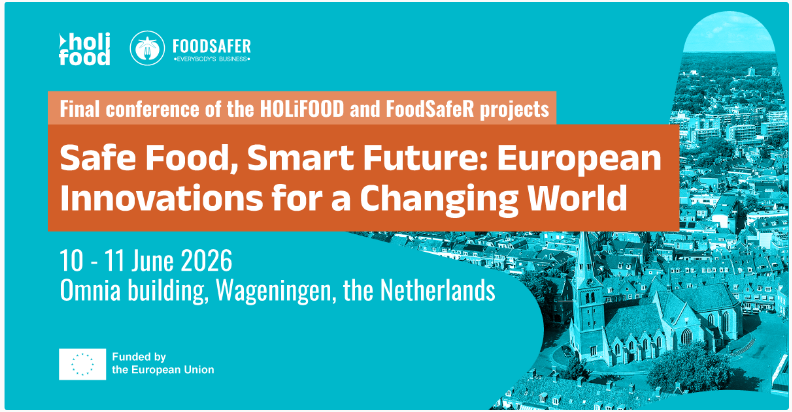
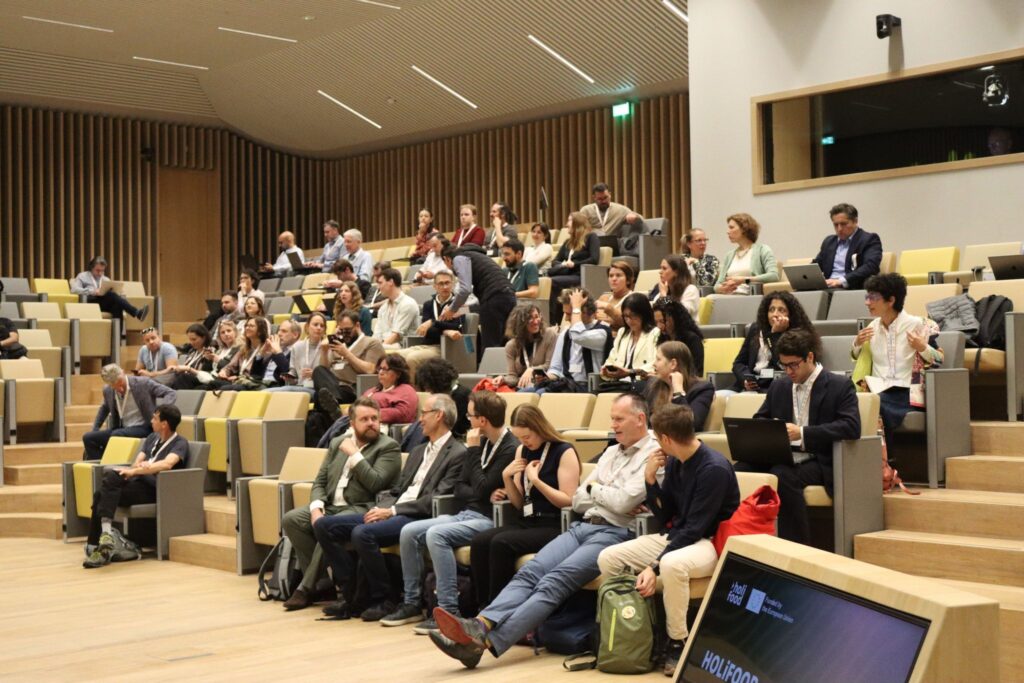
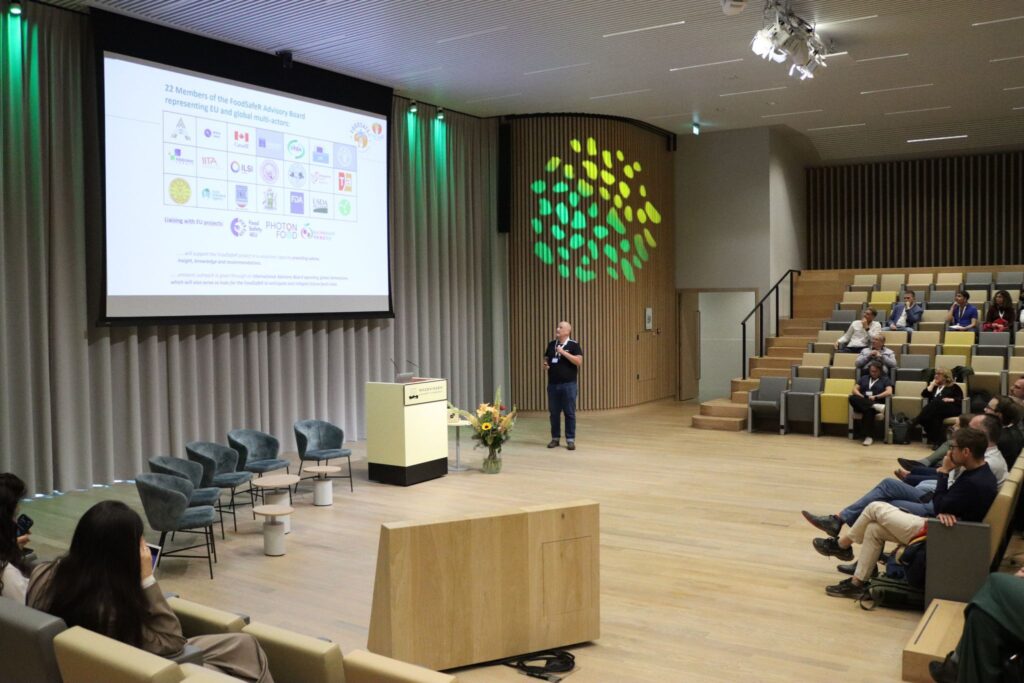
Connecting advanced scientific research with practical industry applications represents a universal challenge within the global food sector. The recent “Safe Food, Smart Future: European Innovations for a Changing World” symposium offered an exceptional platform for fostering essential collaboration. Hosted at the Omnia building on the Wageningen Campus on the 10th and 11th of June 2026, the gathering served as the final conference for the HOLiFOOD and FoodSafeR projects. QAssurance participated in the proceedings, demonstrating advanced digital compliance and food safety solutions alongside leading European researchers.
Shared Food Safety Missions
The symposium served as the final conference for HOLiFOOD and FoodSafeR, two European Union-funded projects dedicated to future-proofing food systems. HOLiFOOD optimizes early warning systems using artificial intelligence, while FoodSafeR identifies chemical and microbial hazards driven by global changes.
Aligning perfectly with such research objectives, QAssurance shares the fundamental mission of advancing proactive risk management. Academic institutions excel at developing theoretical prediction models, whereas food businesses face the practical challenge of implementing complex requirements on the factory floor. Bridging the gap between scientific research and industry reality remains our primary goal. Transforming emerging scientific findings into automated workflows within platforms like iMIS Food translates high-level European research into daily operational tools.
The Urgency for Proactive Risk Management
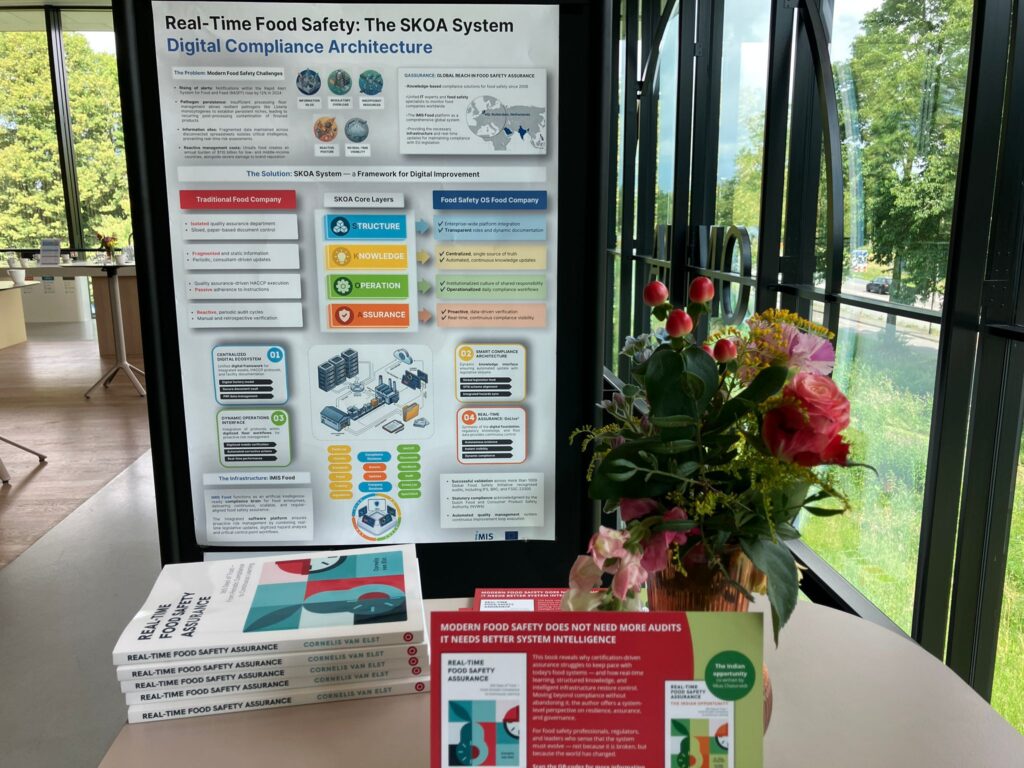
Consulting on daily compliance challenges frequently reveals the highly fragmented nature of traditional quality assurance processes. Presenting the poster titled “Real-Time Food Safety: The SKOA System – Digital Compliance Architecture” at the recent symposium addressed the pressing need for systemic industry change directly. The presentation details the essential transition from siloed, paper-based document control toward a robust, centralized digital ecosystem. Relying on passive adherence to instructions simply no longer protects a brand or the consumer. The recent 12% rise in Rapid Alert System for Food and Feed (RASFF) alerts during 2024 perfectly illustrates the escalating global threat landscape. Such alarming statistics strongly underline the absolute necessity for proactive risk management over reactive, periodic audit cycles.
Check the poster below ⬇️
Implementing The SKOA Framework
Navigating modern food safety challenges requires comprehensive structural improvements rather than temporary, piecemeal solutions. The SKOA framework tackles escalating hazards by integrating four distinct functional layers: Structure, Knowledge, Operation, and Assurance. Fully adopting the specified layers empowers a traditional food company to fundamentally evolve its entire quality culture. The organization transforms into an advanced entity running a “Food Safety OS”, characterized by several key operational shifts:
- Transitioning away from static, periodic document updates by embedding automated, continuous knowledge feeds directly into daily operations.
- Replacing manual, retrospective verification processes with proactive, data-driven evidence collection.
- Securing real-time compliance visibility to ensure continuous operational control and rapid response capabilities across the entire enterprise.
- Synthesizing complex regulatory data and digitized processing floor workflows seamlessly through the iMIS Food platform.
- Establishing the resilient digital infrastructure necessary to maintain seamless, ongoing compliance with evolving European Union legislation.
Three Key Topics Shaping The Future Of Food Safety
The symposium agenda featured several critical discussions that align perfectly with current graduate-level research and industry needs. Three specific presentations stood out for their potential to revolutionize hazard management:
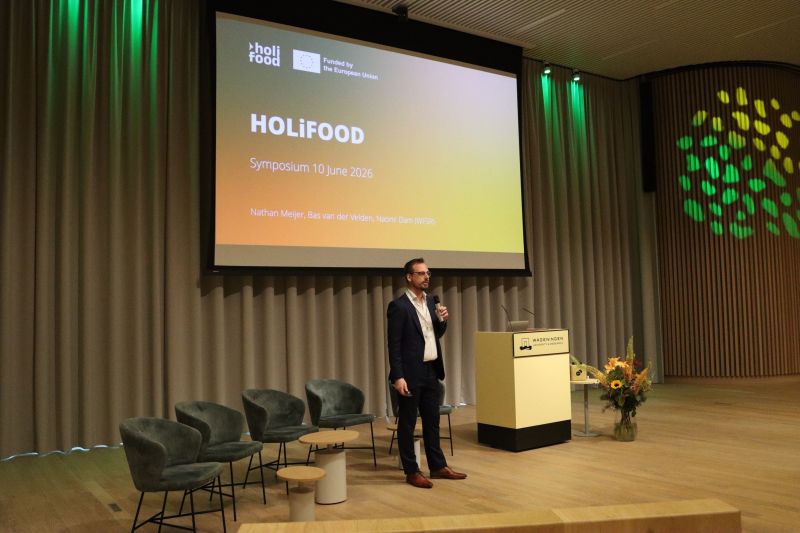
- AI Foundation Models for Food Safety Risks: Bas van der Velden from Wageningen University & Research explored the application of artificial intelligence in risk prediction during the first session of the event. Utilizing large datasets to forecast emerging hazards directly addresses the regulatory overload and information silos that currently plague traditional food companies. Predictive artificial intelligence models will inevitably replace manual, retrospective verification methodologies.
- Persistence of L. monocytogenes: Lauren Alteio, representing the Austrian Competence Centre for Feed and Food Quality, Safety & Innovation, delivered a presentation on bacterial survival strategies. Insufficient processing floor management frequently allows resilient pathogens to establish persistent niches, leading to recurring post-processing contamination of finished products. Understanding biological persistence mechanisms is fundamentally necessary for designing the automated corrective actions managed within modern digital compliance frameworks.
- Holistic Assessment for Food Safety Management (maize, lentils, poultry): Jeanne-Marie Membre from the French National Research Institute for Agriculture, Food and Environment detailed the application of holistic risk assessment across diverse food matrices. Evaluating the entire supply chain system, rather than isolated variables, is required to build a proactive, data-driven verification culture.
Integrating such diverse academic insights directly into daily operations remains the primary function of QAssurance. While universities and research centers develop the theoretical foundations for artificial intelligence prediction and holistic assessment, practical application requires robust digital infrastructure. QAssurance translates complex hazard data into actionable, automated workflows within the iMIS Food platform. Synthesizing advanced research with structural compliance tools ensures food businesses can actively transition from reactive management to a proactive, real-time safety culture.
Conclusion: The Future Of Digital Compliance
Transitioning from traditional, reactive quality assurance to a proactive, real-time digital ecosystem represents the only sustainable path forward for the food sector. Events like the final HOLiFOOD and FoodSafeR conference emphasize the critical importance of integrating cutting-edge academic research with practical factory floor applications. By utilizing platforms like iMIS Food to implement the SKOA framework, QAssurance continues to translate theoretical hazard predictions and holistic risk assessments into daily operational reality. Embracing modern compliance architectures will ultimately ensure continuous regulatory alignment, superior hazard management, and enhanced protection for global food supply chains.
Stay Connected: Join our Newsletter!
Ready to learn more? Subscribe to our newsletter for the latest updates, tips, and exclusive content delivered straight to your inbox!
Sources and Further Reading
- HOLiFOOD And FoodSafeR Final Symposium Agenda: “Safe Food, Smart Future: European Innovations for a Changing World” (June 10-11, 2026), Omnia Building, Wageningen, The Netherlands.
- HOLiFOOD Project Official Website: Information regarding the holistic early warning systems and Horizon Europe funding. You can find more details at holifoodproject.eu.
- FoodSafeR Project Official Website: Details on the Open Digital Hub and proactive risk management for emerging hazards. You can explore the platform at foodsafer.com.
- Rapid Alert System for Food and Feed (RASFF) Annual Report (2025) : European Union annual safety alert data detailing the 12% rise in 2024.