
In the modern food industry, success is no longer defined solely by the certificates displayed in a boardroom, but by the integrity and accessibility of the data generated inside the factory. A fundamental principle for modern manufacturing is that external assurance can only succeed when the internal reality is live, structured, and transparent; achieving this state requires a definitive Go-Live strategy that transforms manual processes into a continuous digital environment.
Across the global sector, many assurance initiatives fail because the production facility remains a “black box” until an audit occurs. Information is often scattered across paper logs, critical knowledge is trapped in static PDF manuals, and daily floor operations remain disconnected from the digital systems meant to ensure safety.
The Factory Bottleneck: Why Traditional Implementation Fails
Traditionally, bringing a food factory “online” for digital assurance takes months, often stalled by a long “preparation phase” that prioritizes audit-readiness over operational reality. This creates a structural bottleneck characterized by:
- Retrospective documentation: Information is collected “after the fact” to satisfy an auditor, rather than being captured as it happens during production.
- Static HACCP studies: Risk assessments often exist as dormant documents in a folder, rather than active logic that governs daily machinery and personnel behavior.
- Implementation fatigue: Endless design phases and configuration cycles leave factories in a perpetual state of “getting ready” rather than being “live.”
To remove this bottleneck, the industry must shift from “preparing for audits” to operating in a continuous assurance mode.
The 30-day Roadmap: GoLive² Practical Logic
Most digital initiatives struggle because they lack a defined finish line. By utilizing a pre-structured knowledge and assurance framework, factories can move from manual chaos to digital control in exactly four weeks.
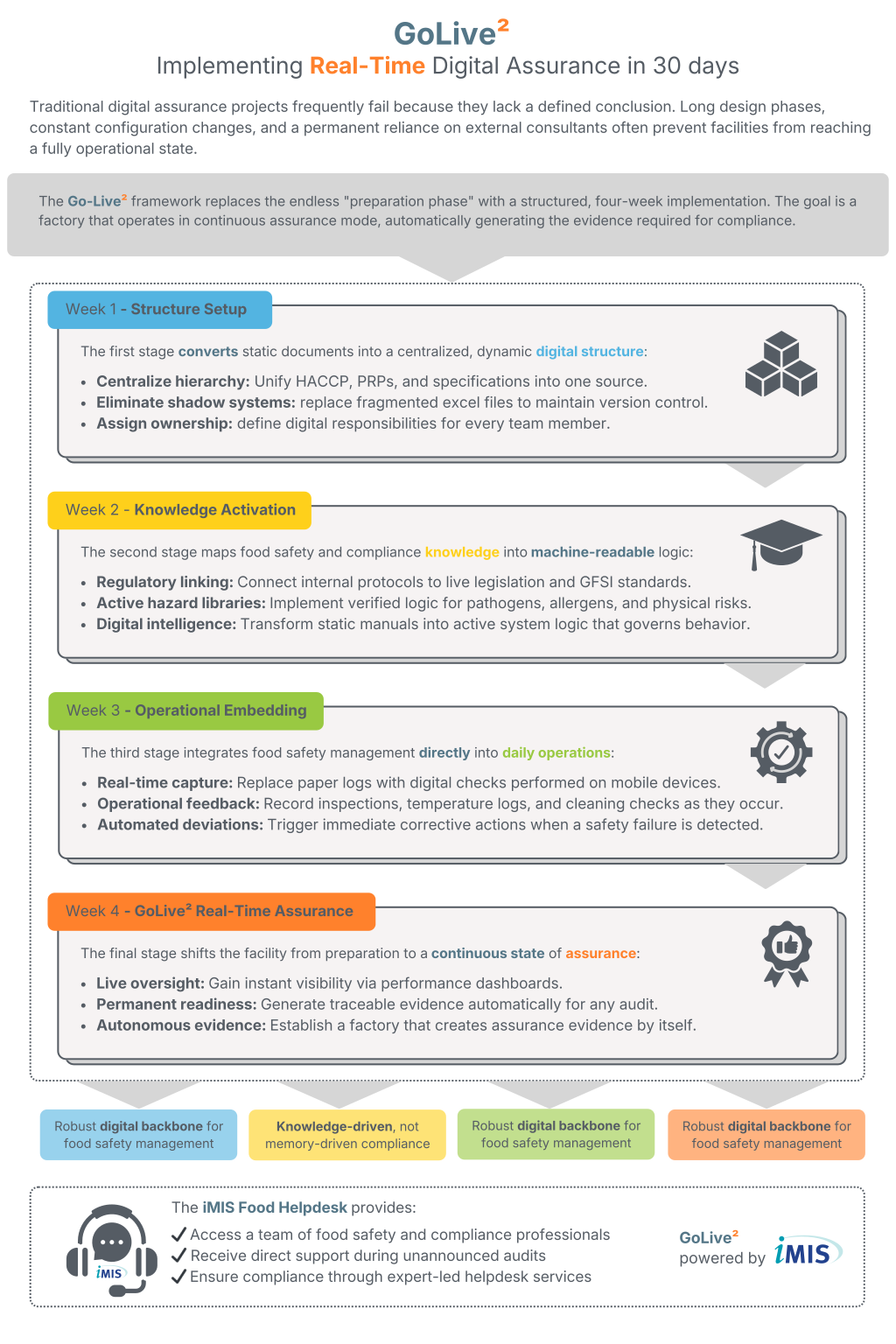
Week 1 — Structure Setup: The digital foundation
The goal of the first week is to convert static documents into a centralized, dynamic digital framework.
- Centralization: Establishing a clear hierarchy for HACCP plans, Prerequisite Programs (PRPs), and product specifications.
- Eliminating shadow systems: Replacing fragmented Excel sheets and parallel files with a single “source of truth” that ensures version control is absolute.
- Task ownership: Assigning digital responsibilities so that every team member knows exactly which safety protocols they own within the system.
Week 2 — Knowledge Activation: Intelligent compliance
During the second week, food safety and compliance knowledge is mapped into machine-readable logic.
- Regulatory linking: Connecting the factory’s internal protocols directly to live knowledge sources, such as EU legislation (e.g., Reg. (EC) No 2073/2005) or GFSI standards.
- Hazard libraries: Activating verified hazard tables for pathogens, allergens, and physical risks. This ensures that the system supports decision-making based on scientific parameters rather than human memory.
Week 3 — Operational Embedding: Daily operations
This phase shifts food safety from the quality manager’s office directly to the production floor.
- Digital checks: Integrating monitoring tasks into daily workflows via tablets or mobile devices.
- Live feedback loops: Capturing inspections, temperature logs, and cleaning checks as they occur. This ensures that if a deviation happens—such as a cooling failure—the system triggers a corrective action immediately.
Week 4 — Go-Live: Real-time assurance
In the final week, the system begins producing live verification and oversight.
- Performance dashboards: Managers gain instant visibility into the “assurance status” of the entire facility.
- Instant audit evidence: The factory is now in a state of permanent audit readiness. Whether an inspector arrives announced or unannounced, the evidence is already generated and traceable.
Why Go-Live Real-Time Assurance is the Future of Trust
External stakeholders—including food safety authorities, retailers, and certification bodies—rely entirely on the reliability of factory data. When a factory operates on real-time assurance, the benefits extend beyond simple compliance:
- Accelerated time to market: New products can be launched with full assurance backing in weeks rather than months.
- Structural cost reduction: Automating the proof-of-control process can reduce administrative labor by up to 85%. This makes robust safety achievable for smaller enterprises.
- Proactive risk management: Trends in environmental monitoring (e.g., Listeria swabs) become visible early. This allows for intervention before a contamination event leads to a recall.
iMIS Food architecture: how the system implements Go-Live
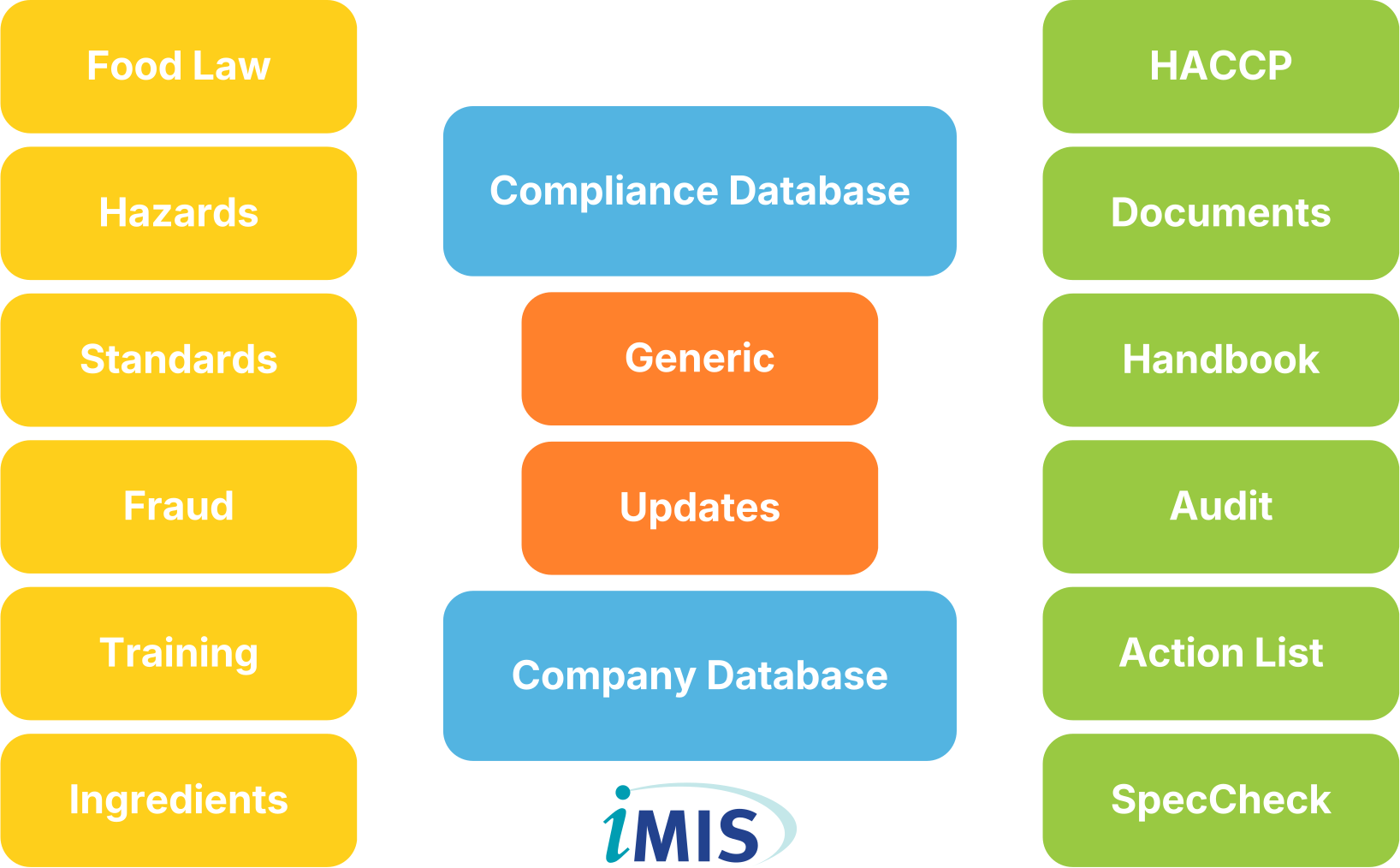
The ability to “Go-Live” in just 30 days is made possible through the unique architecture of iMIS Food. The system utilizes a dual-database approach that connects global compliance knowledge with specific factory operations.
- Compliance database: The external layer provides a foundation of “generic” food safety intelligence, including food law, hazards, standards, fraud, and training data.
- Real-time updates: Ensures that as legislation or standards change, the factory’s internal protocols are adjusted dynamically rather than through manual revision.
- The company database: This internal layer houses site-specific information, such as the HACCP plan, handbook, and audit results.
- Operational tools: By mapping the company data against the compliance database, the system automates essential tasks, creating a live verification environment.
When these layers are connected, a factory no longer needs to prepare for assurance—it is already operating within it.
Conclusion: Assurance Starts Inside
The future of food safety is not defined by more checks or more pressure, but by better system intelligence at the factory level. When a facility is live, structured, and transparent, assurance is no longer an episodic event—it is a continuous, resilient state of operation.
Related articles to The Go-Live Real-Time Assurance Method
Many customers and visitors to this page 'The Go-Live Real-Time Assurance Method' also viewed the articles and manuals listed below: